
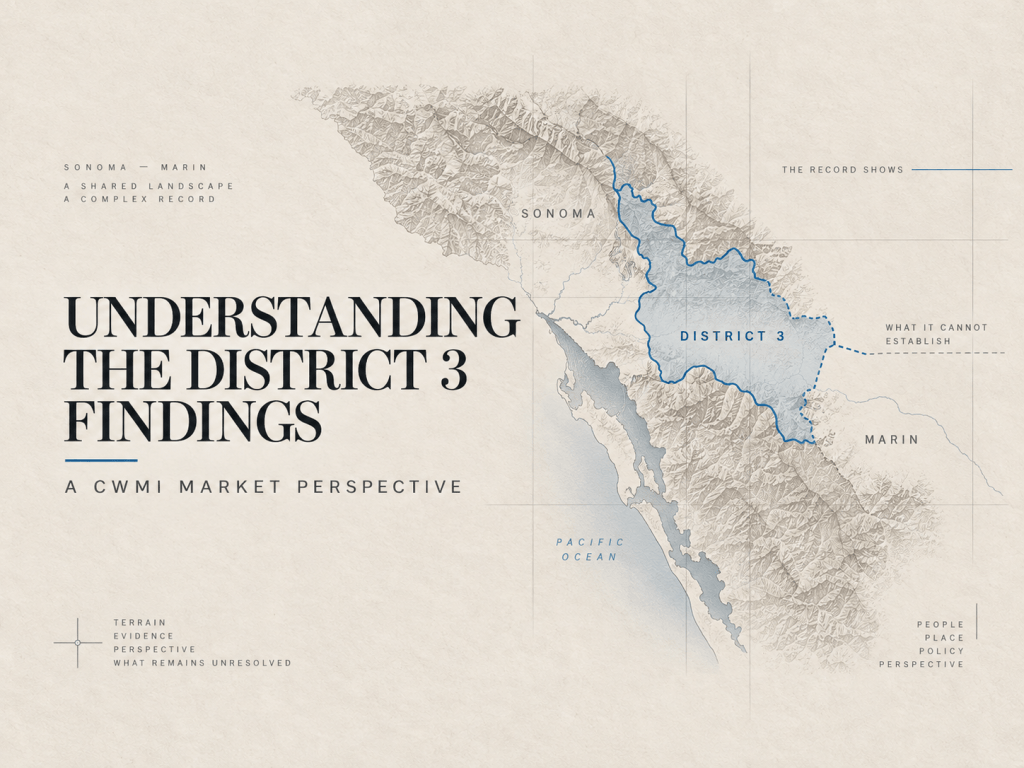
The District 3 analysis gives us a clearer view of Sonoma and Marin’s purchased-grape market between 2000 and 2025. It shows that purchased volume declined and that the average price per ton, although higher in reported dollars, was worth less after inflation. Together, these changes reduced the real value of the purchased market.
The findings also have limits.
The record does not show:
- That Sonoma must plant different varieties.
- That vineyards should be removed or replaced.
- That Sonoma has lost its reputation.
- That buyers, wineries or distributors captured the missing value.
- That individual vineyards became unprofitable.
- That red varieties are inherently disadvantaged.
- That Sonoma’s diversity provides economic protection.
- That adaptation is necessarily the correct response.
These questions require information not contained in the district record. Vineyard costs, contracts, acreage, winery margins, channel pricing, variety-level performance and site conditions will all help provide a fuller picture.
The District 3 findings give growers, wineries and other members of the wine community a common starting point. They identify what changed in the purchased market without assigning responsibility or recommending one response for every vineyard.
Our present conclusion is:
The vineyard has not necessarily failed to change. The purchased market has failed to preserve the real value it once carried. The record cannot yet tell us why—or where the value went.
 California Wine Index
Leave a comment